REconstrucción climática y del nivel del MAR durante el Pleistoceno en el karst del Montrí (REMAR)
Abstract
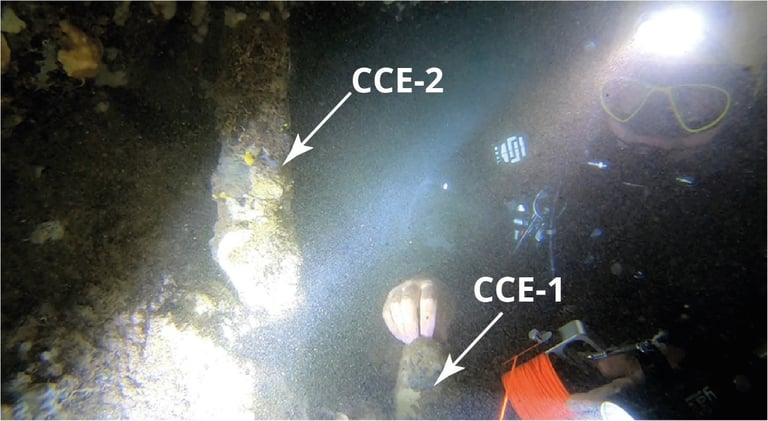
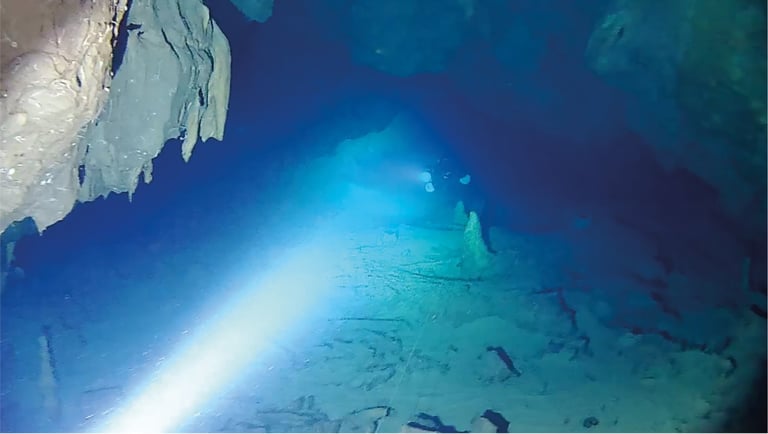
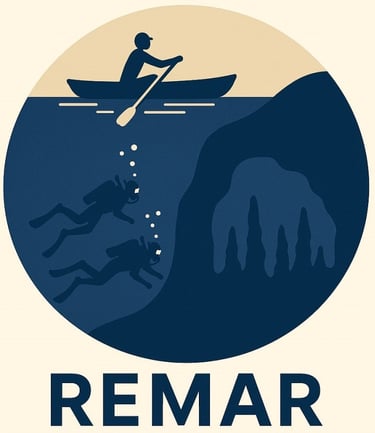
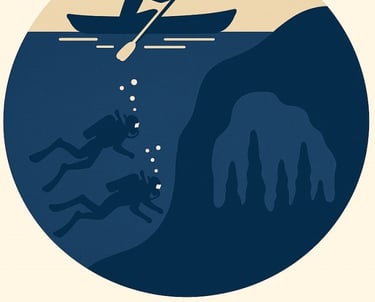
The REMAR project (Climatic Reconstruction and Sea-Level Variations during the Pleistocene in the Montgrí Karst) focuses on reconstructing past sea-level oscillations and climatic conditions by studying submerged speleothems in coastal caves of the Montgrí massif on the Costa Brava (Catalonia).
Speleothems—such as stalagmites and stalactites—are exceptional natural archives that preserve geochemical and isotopic signals linked to the environmental conditions prevailing at the time of their formation. In coastal karst caves, these formations provide valuable evidence of both past climate variability and relative sea-level changes.
The scientific importance of REMAR lies in the capacity of speleothems to reconstruct climatic conditions over timescales of hundreds of thousands of years, offering key insights into long-term natural variability and helping to place current global warming into a broader geological context. In particular, submerged vadose speleothems (SVS) serve as reliable indicators of former sea-level positions during the Pleistocene.
The project applies a multidisciplinary methodology that combines underwater sampling—conducted in collaboration with the Montgrí Natural Park—with advanced laboratory analyses. These include stable isotope measurements (δ¹³C and δ¹⁸O), trace element analysis, and high-precision U–Th dating, carried out in leading national and international research laboratories. In parallel, REMAR includes outreach and dissemination activities aimed at transferring scientific knowledge to society.
By improving our understanding of past climate dynamics and sea-level variations in the Mediterranean, REMAR provides essential information for anticipating future scenarios associated with climate change and sea-level rise, contributing to more informed environmental planning and risk assessment.