Sedimentos que Ocultan y Revelan: dinámica sedimentaria y contexto geo-arqueológico del yacimiento del Bronce en la cueva de Ostolo (Navarra) (SORBO)
Abstract
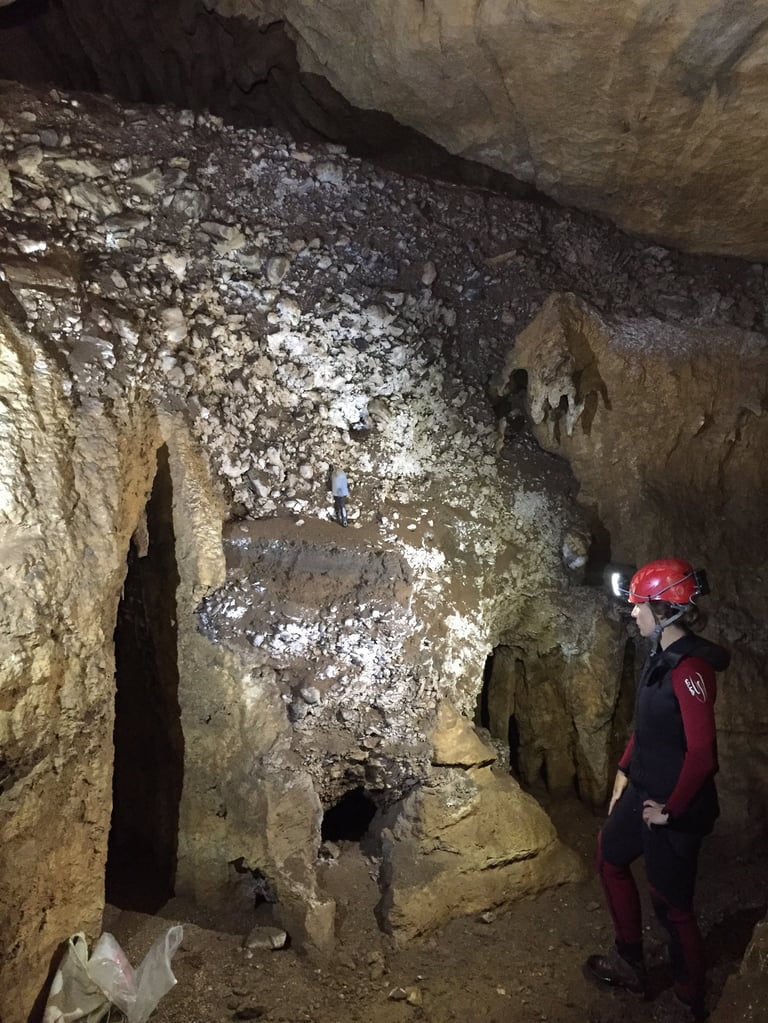
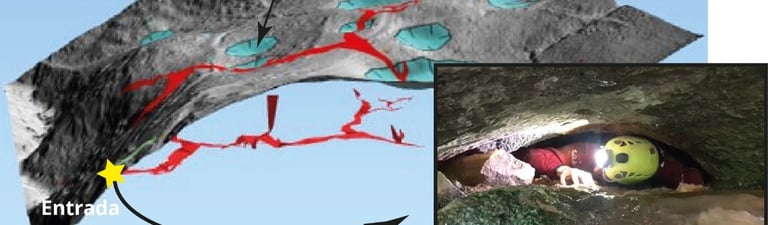
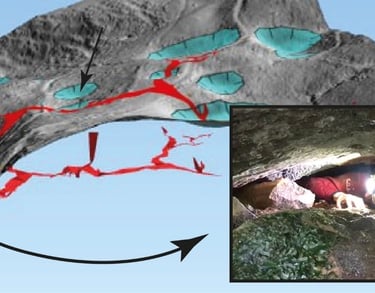
The SORBO project investigates how cold pulses and soil degradation affected sedimentation in Ostolo Cave (Basque Country), and proposes hypotheses about the access routes used by Bronze Age communities to enter the cave. The current spring entrance is extremely narrow (35–40 cm high) and difficult to pass even with modern speleological equipment.
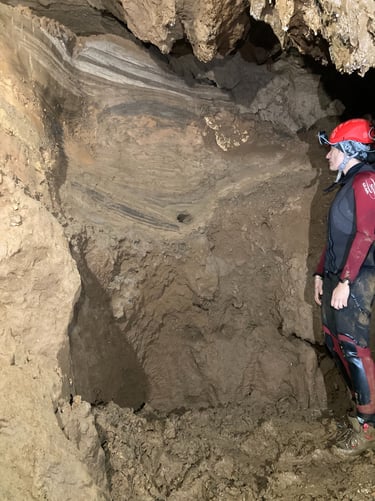
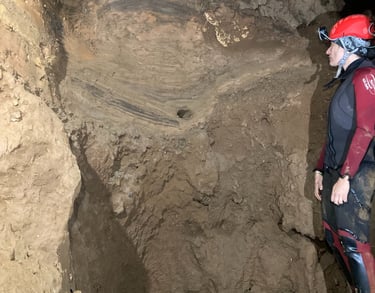
Inside the cave (631 m of passages), human remains of at least six individuals, hearths, a bone button, and an archer’s bracer (Bell Beaker complex) have been found. A radiocarbon date confirms funerary use during the Chalcolithic–Bronze Age transition. The difficult access suggests the original morphology may have differed from today, so the project reconstructs the sedimentary and geomorphological records of the karst system.
Ostolo’s exceptional value lies in the rarity of deep, hard-to-access sepulchral caves from this period. Comparisons with Cussac, Loizu, Ojo Guareña, Sima de la Curra, and La Garma allow analysis of funerary practices, subterranean mobility, and liminal space management in recent Prehistory.


Partners